


Hey there! As a supplier of Notebook Ultrasound devices, I often get asked if these nifty gadgets can be used for dental imaging. Well, let's dive right into it and explore this topic.
First off, let's understand what a Notebook Ultrasound is. It's a compact, portable ultrasound device that offers a great deal of flexibility. Unlike the big, bulky ultrasound machines you see in large medical facilities, a Notebook Ultrasound is lightweight and easy to carry around. You can take it from one room to another, or even on the go if needed. We also have other types of ultrasound devices in our range, like the Handheld Ultrasound, Tablet Ultrasound Machine, and Portable Black and White Ultrasound. Each has its own unique features and advantages, but today we're focusing on the Notebook Ultrasound.
Now, when it comes to dental imaging, traditional methods like X - rays have been the go - to for a long time. X - rays can provide clear images of the teeth and the underlying bone structure. They're quick and can give a good overview of the dental situation. However, they do have some drawbacks. X - rays expose patients to ionizing radiation, which can be a concern, especially for frequent or long - term use. Also, they mainly show a two - dimensional view of the teeth and bones.
So, where does the Notebook Ultrasound fit in? Well, ultrasound technology works by sending high - frequency sound waves into the body. When these sound waves hit different tissues, they bounce back as echoes, which are then converted into images. In dental applications, this can be quite useful.
One of the main benefits of using a Notebook Ultrasound for dental imaging is that it's radiation - free. This is a huge plus, especially when it comes to patients who may need multiple imaging sessions over time. For example, children or patients with dental conditions that require regular monitoring can benefit greatly from a radiation - free imaging option.
Another advantage is that ultrasound can provide real - time imaging. You can see the movement and function of the dental tissues as they happen. This can be really helpful for diagnosing problems like temporomandibular joint (TMJ) disorders. The TMJ is the joint that connects your jaw to your skull, and problems with it can cause pain, clicking, or difficulty in opening and closing the mouth. With a Notebook Ultrasound, dentists can observe the joint in action and get a better understanding of what's going on.
Ultrasound can also be used to detect soft tissue problems in the mouth. It can show details of the gums, salivary glands, and other soft tissues that may not be as clearly visible on an X - ray. For instance, it can help in diagnosing gum diseases like periodontitis. By looking at the thickness and structure of the gum tissue, dentists can determine the severity of the disease and plan appropriate treatment.
However, it's not all sunshine and rainbows. There are some limitations to using a Notebook Ultrasound for dental imaging. One of the main challenges is that ultrasound waves don't penetrate bone as well as X - rays do. So, when it comes to getting a detailed view of the internal structure of the teeth and the underlying bone, X - rays still have an edge. For example, if a dentist needs to see a small crack inside a tooth or the exact position of an impacted tooth deep in the bone, an X - ray may be more suitable.

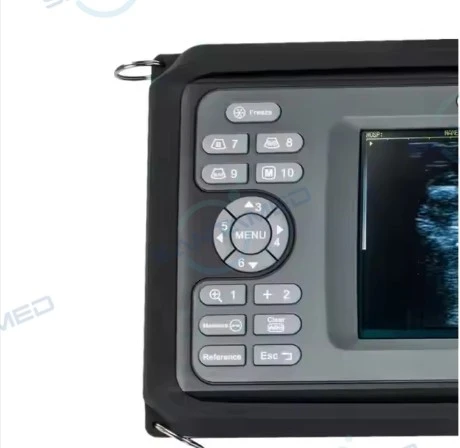
The quality of the ultrasound image can also be affected by factors like the presence of air in the mouth. Since ultrasound waves don't travel well through air, areas with air pockets can create artifacts in the image, making it harder to interpret. Also, the skill of the operator plays a big role. A well - trained dentist or technician is needed to get the best possible images with a Notebook Ultrasound.
In terms of the practicality of using a Notebook Ultrasound in a dental office, it's quite convenient. Its portability means that it can be easily moved around the office and used in different examination rooms. It also doesn't require a large amount of space for installation, unlike some of the larger X - ray machines.
So, can a Notebook Ultrasound be used for dental imaging? The answer is yes, but with some caveats. It's a great addition to the dental imaging toolkit, especially for its radiation - free and real - time imaging capabilities. It can be used in conjunction with X - rays to provide a more comprehensive view of the dental health of patients.
If you're a dentist or a dental practice looking to expand your imaging options, a Notebook Ultrasound could be a great choice. It offers a different perspective on dental problems and can enhance the quality of care you provide to your patients. And if you're interested in learning more about our Notebook Ultrasound devices or any of our other ultrasound products, don't hesitate to reach out. We're here to help you make the right choice for your practice.
In conclusion, while a Notebook Ultrasound may not completely replace X - rays in dental imaging, it has a lot to offer. Its unique features make it a valuable tool for diagnosing and treating a variety of dental conditions. Whether you're looking to improve patient safety, get real - time information, or detect soft tissue problems, a Notebook Ultrasound could be the answer.
If you're interested in discussing how our Notebook Ultrasound devices can fit into your dental practice, we'd love to have a chat with you. Contact us to start the conversation and explore the possibilities of adding this innovative technology to your imaging arsenal.
References
- "Dental Imaging: Principles and Techniques" by Richard B. Langlais and Craig S. Miller
- "Ultrasound in Dentistry: Current Applications and Future Directions" in the Journal of Dental Research


