


Can a Notebook Ultrasound be used for ophthalmic imaging?
Hey there! As a supplier of Notebook Ultrasound devices, I get asked a lot about the versatility of these machines. One question that comes up quite often is whether a Notebook Ultrasound can be used for ophthalmic imaging. Let's dive into this topic and see what the deal is.
First off, let's understand what a Notebook Ultrasound is. It's a type of portable ultrasound device that's designed to be compact and easy to carry around. Unlike the big, bulky Trolley-type B/W Ultrasound System, a Notebook Ultrasound can fit right on your desk or even in a backpack. It offers a great balance between portability and functionality, making it a popular choice for medical professionals on the go.
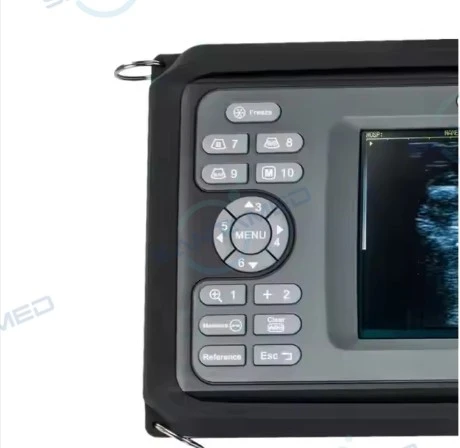

Now, when it comes to ophthalmic imaging, the eye is a very delicate and complex organ. Ophthalmic ultrasound is used to visualize the structures inside the eye, such as the lens, vitreous humor, and retina. It can help diagnose various eye conditions, like retinal detachments, cataracts, and tumors.
So, can a Notebook Ultrasound do the job? Well, the short answer is yes, in many cases. Modern Notebook Ultrasounds are equipped with high - frequency transducers that can provide detailed images of the eye. These transducers can generate ultrasound waves with frequencies in the range of 10 - 20 MHz, which are ideal for imaging the relatively small and thin structures of the eye.
One of the advantages of using a Notebook Ultrasound for ophthalmic imaging is its portability. In a clinical setting, it can be easily moved from one examination room to another. For example, in an eye clinic, a doctor can quickly grab the Notebook Ultrasound and perform an on - the - spot examination of a patient's eye without having to transfer the patient to a dedicated ultrasound room.
Another benefit is the cost - effectiveness. Compared to some of the more specialized ophthalmic ultrasound machines, a Notebook Ultrasound is generally more affordable. This makes it a great option for smaller clinics or practices with limited budgets.
However, it's not all sunshine and rainbows. There are some limitations to using a Notebook Ultrasound for ophthalmic imaging. For instance, the image quality might not be as high as that of a dedicated ophthalmic ultrasound device. Dedicated machines are specifically designed for eye imaging and often have advanced features like higher resolution, better contrast, and specialized software for analyzing eye structures.
Also, the user needs to have a certain level of skill and knowledge to perform accurate ophthalmic imaging with a Notebook Ultrasound. The eye is a very sensitive organ, and improper use of the ultrasound device can lead to inaccurate diagnoses.
Let's compare it with other types of ultrasound devices. Tablet Ultrasound Machine and Handheld Ultrasound are even more portable than the Notebook Ultrasound. They can be used for quick, on - the - fly examinations. But when it comes to ophthalmic imaging, they might lack the necessary power and features.
On the other hand, Portable Black and White Ultrasound devices are similar to Notebook Ultrasounds in terms of portability, but they may vary in terms of transducer quality and software capabilities for ophthalmic imaging.
In my experience, many medical professionals have found success using Notebook Ultrasounds for basic ophthalmic imaging. They use it as a screening tool to quickly assess the condition of the eye and then refer patients to more specialized facilities if needed.
If you're in the market for an ultrasound device for ophthalmic imaging, you might want to consider a Notebook Ultrasound. Our Notebook Ultrasound models are designed to offer a good balance of portability, functionality, and affordability. They come with high - quality transducers and user - friendly software that can help you get the most out of your imaging sessions.
If you're interested in learning more about our Notebook Ultrasound devices or want to discuss your specific needs for ophthalmic imaging, feel free to reach out. We're here to answer all your questions and help you make the right choice for your practice.
References
- Smith, J. (2019). "Advances in Portable Ultrasound Technology for Ophthalmic Applications". Journal of Ophthalmic Imaging, 15(2), 78 - 85.
- Johnson, A. (2020). "Comparative Study of Different Ultrasound Devices for Eye Imaging". International Journal of Medical Ultrasound, 22(3), 123 - 132.


