


Hey there! As a supplier of Medical Infusion Pumps, I've seen firsthand the diverse range of these devices and the unique features they bring to the table. In this blog, I'm gonna break down the differences between different types of medical infusion pumps.
Let's start with the basics. A Medical Infusion Pump is a crucial piece of equipment in healthcare settings. It's designed to deliver fluids, such as medications, nutrients, or blood products, into a patient's body in a controlled and precise manner. This helps ensure that patients receive the right amount of treatment at the right time.
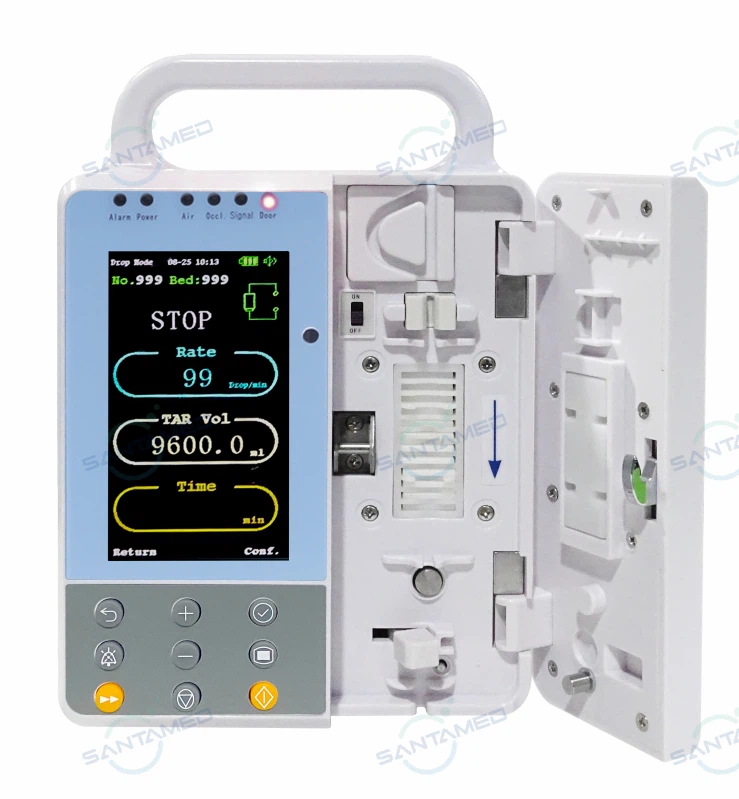
One of the most common types of infusion pumps is the volumetric infusion pump. These pumps are super accurate when it comes to delivering a specific volume of fluid over a set period. They're often used in hospitals for things like administering antibiotics, chemotherapy drugs, or intravenous fluids. Volumetric pumps work by using a piston or a peristaltic mechanism to push the fluid through the tubing. The piston type is known for its high precision, as it can deliver very small volumes of fluid accurately. On the other hand, peristaltic pumps are more flexible and can handle different types of tubing, which makes them a popular choice in many healthcare facilities.
Another type is the syringe infusion pump. These pumps are typically used for delivering small amounts of medications, especially in critical care settings. They work by pushing a syringe plunger at a controlled rate to deliver the medication. Syringe pumps are great for medications that need to be administered slowly and precisely, like painkillers or sedatives. They're also relatively small and portable, which makes them useful for patients who need to be moved around within the hospital.
Now, let's talk about Portable IV Infusion Pump. These are a game - changer for patients who need long - term infusion therapy but don't want to be confined to a hospital bed. Portable IV infusion pumps allow patients to go about their daily lives while still receiving the necessary treatment. They're lightweight and easy to carry, and some even come with rechargeable batteries. Portable pumps can be programmed to deliver the medication at a specific rate, just like their larger counterparts in the hospital. However, they do have some limitations. For example, they usually have a smaller reservoir, which means they need to be refilled more often.
Ambulatory infusion pumps are a type of portable pump that's specifically designed for patients who are mobile. These pumps are often used for chemotherapy, pain management, or insulin delivery. They can be worn on the body, either on a belt or in a pocket, and are designed to be as unobtrusive as possible. Ambulatory pumps are also equipped with advanced features like alarms and dose calculators to ensure patient safety.
There are also enteral infusion pumps, which are used to deliver liquid nutrition directly into the patient's gastrointestinal tract. These pumps are commonly used for patients who have difficulty swallowing or who need additional nutrition support. Enteral pumps are different from intravenous pumps because they deal with a different type of fluid and have to be compatible with the digestive system. They usually have a slower flow rate and are designed to prevent clogging, as the liquid nutrition can be thicker than medications.
When it comes to safety features, different types of infusion pumps have different levels of protection. Most modern pumps are equipped with alarms that go off if there's a problem, such as an occlusion in the tubing, low battery, or incorrect flow rate. Some pumps also have built - in barcode scanners to ensure that the right medication is being administered to the right patient. High - end pumps may even have wireless connectivity, which allows healthcare providers to monitor the pump's status remotely.
In terms of ease of use, some pumps are more user - friendly than others. Volumetric pumps, for example, can be a bit more complex to set up and operate, especially for new users. They often require a certain level of training to ensure accurate programming. On the other hand, syringe pumps and portable pumps are generally easier to use, as they have simpler interfaces and fewer settings.

Cost is another factor to consider when choosing an infusion pump. Volumetric pumps are usually more expensive because of their high precision and advanced features. Portable and ambulatory pumps also tend to be on the pricier side, mainly because of their portability and the technology they incorporate. Enteral pumps are generally more affordable, as they're less complex and have a more specific use case.
As a supplier, I understand that choosing the right infusion pump can be a challenging decision for healthcare providers. That's why we offer a wide range of options to meet different needs and budgets. Whether you're a small clinic looking for an affordable enteral pump or a large hospital in need of high - end volumetric pumps, we've got you covered.
If you're in the market for a medical infusion pump, I encourage you to reach out to us. We can provide you with detailed information about our products, offer product demonstrations, and help you find the best solution for your specific requirements. Our team of experts is always ready to assist you in making an informed decision. Don't hesitate to start a conversation with us about your procurement needs. We're here to make sure you get the right infusion pump for your patients.
References:
- "Medical Devices: Technology and Clinical Applications" by Joseph D. Bronzino
- "Handbook of Infusion Therapy" by Patricia A. McGonigle and Judith Mastrian


