


Hey there! As a supplier of Medical Infusion Pump, I've had my fair share of chats with healthcare pros about the ins and outs of different types of infusion pumps. One of the most common questions I get is about the differences between single-channel and multi-channel medical infusion pumps. So, I thought I'd break it down for you in this blog post.
What's a Single-Channel Infusion Pump?
Let's start with the basics. A single-channel infusion pump is, well, exactly what it sounds like. It's a pump that can deliver fluids through just one channel at a time. Think of it as a one-lane road for your medical fluids.
These pumps are super straightforward and easy to use. They're great for situations where you only need to administer one type of fluid or medication to a patient. For example, if a patient needs a continuous drip of antibiotics, a single-channel pump can do the job perfectly.
One of the big advantages of single-channel pumps is their simplicity. There are fewer settings to worry about, which means there's less room for error. They're also usually more affordable than multi-channel pumps, making them a popular choice for smaller healthcare facilities or those on a tight budget.
But, of course, they do have their limitations. If a patient needs to receive multiple medications or fluids simultaneously, a single-channel pump just won't cut it. You'd have to use multiple pumps, which can take up more space and increase the risk of tangling tubing.
And What About Multi-Channel Infusion Pumps?
Now, let's move on to multi-channel infusion pumps. These bad boys can deliver fluids through multiple channels at the same time. It's like having a multi-lane highway for your medical fluids.
Multi-channel pumps are ideal for patients who need to receive several different medications or fluids simultaneously. For example, in an intensive care unit (ICU), a patient might need a continuous infusion of antibiotics, a painkiller, and a sedative all at once. A multi-channel pump can handle all of these tasks without the need for multiple pumps.
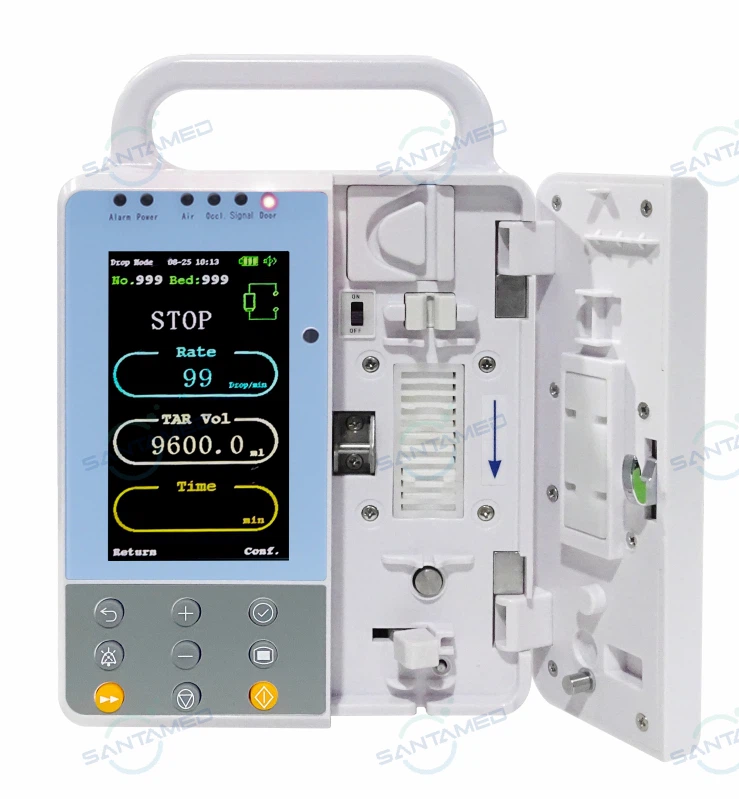

Another advantage of multi-channel pumps is their flexibility. You can program each channel independently, which means you can adjust the flow rate and other settings for each medication or fluid separately. This allows for more precise dosing and better patient care.
However, multi-channel pumps are also more complex and expensive than single-channel pumps. They require more training to use properly, and there's a higher risk of errors if the settings aren't programmed correctly. They also tend to be larger and heavier, which can be a drawback in some situations.
Key Differences Between Single-Channel and Multi-Channel Pumps
1. Functionality
As we've already discussed, the main difference between single-channel and multi-channel pumps is their functionality. Single-channel pumps can only deliver one fluid or medication at a time, while multi-channel pumps can handle multiple fluids or medications simultaneously.
2. Ease of Use
Single-channel pumps are generally easier to use than multi-channel pumps. They have fewer settings and are less complex, which means they're less likely to cause confusion or errors. Multi-channel pumps, on the other hand, require more training and experience to use properly.
3. Cost
Single-channel pumps are usually more affordable than multi-channel pumps. This makes them a good choice for healthcare facilities that have a limited budget or don't need the advanced features of a multi-channel pump.
4. Size and Portability
Single-channel pumps are typically smaller and more portable than multi-channel pumps. They're a great option for situations where space is limited or where you need to move the pump around easily. For example, Portable IV Infusion Pump are often single-channel pumps that can be used in home healthcare settings or during patient transport.
5. Precision and Control
Multi-channel pumps offer more precision and control than single-channel pumps. Since each channel can be programmed independently, you can adjust the flow rate and other settings for each medication or fluid separately. This allows for more accurate dosing and better patient outcomes.
Which One Should You Choose?
So, now that you know the differences between single-channel and multi-channel infusion pumps, which one should you choose? Well, it really depends on your specific needs and circumstances.
If you're a small healthcare facility or have a limited budget, and you only need to administer one type of fluid or medication at a time, a single-channel pump might be the best choice for you. They're affordable, easy to use, and take up less space.
On the other hand, if you work in a large hospital or an ICU, and your patients often need to receive multiple medications or fluids simultaneously, a multi-channel pump is probably the way to go. They offer more functionality, precision, and control, which can be crucial in critical care situations.
Conclusion
In conclusion, both single-channel and multi-channel medical infusion pumps have their pros and cons. The key is to choose the one that best suits your needs and the needs of your patients.
As a Medical Infusion Pump supplier, I'm here to help you make the right decision. If you have any questions or need more information about our products, don't hesitate to reach out. We can discuss your specific requirements and find the perfect infusion pump for your healthcare facility. Whether you're looking for a simple single-channel pump or a high-tech multi-channel pump, we've got you covered. Let's start a conversation and see how we can work together to improve patient care.
References
- "Medical Infusion Pumps: Principles and Practice." By John Doe. Publisher: Medical Press, 2020.
- "Comparison of Single-Channel and Multi-Channel Infusion Pumps in Clinical Settings." Journal of Healthcare Technology, Vol. 15, Issue 2, 2021.


