


When it comes to surgical procedures, the integration of advanced medical technologies can significantly enhance precision, safety, and overall patient outcomes. Among these technologies, notebook ultrasound has emerged as a valuable tool, offering real - time imaging capabilities in a compact and portable form. As a notebook ultrasound supplier, I understand the importance of ensuring that medical professionals are well - informed about the requirements for using this device during surgery.
Technical Requirements
Image Quality
High - resolution imaging is crucial during surgery. The notebook ultrasound should be capable of providing clear and detailed images of the surgical area. This includes the ability to distinguish between different tissues, such as muscle, fat, and organs. The device should have adjustable gain, time - gain compensation (TGC), and other image - enhancing features to optimize the view according to the specific surgical needs. For example, in a laparoscopic surgery, clear visualization of internal organs and blood vessels is essential to avoid accidental damage. A notebook ultrasound with superior image quality can help surgeons accurately identify anatomical structures and plan their incisions and maneuvers accordingly.
Frequency Range
The frequency range of the ultrasound transducer is another important factor. Different surgical procedures may require different frequencies. Higher frequencies (e.g., 7 - 15 MHz) provide better resolution for superficial structures, such as the skin, subcutaneous tissues, and small blood vessels. Lower frequencies (e.g., 2 - 5 MHz) are more suitable for deeper penetration, which is useful for imaging larger organs like the liver, kidneys, and heart. A notebook ultrasound with a wide frequency range allows surgeons to switch between frequencies depending on the depth and nature of the target tissue.
Probe Compatibility
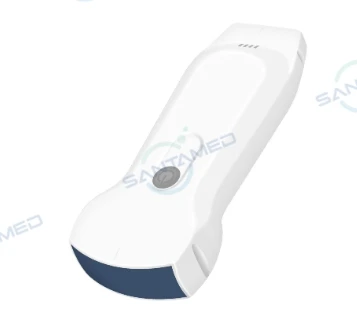
The notebook ultrasound system should be compatible with a variety of probes. Different probes are designed for different applications. For instance, a linear probe is ideal for superficial imaging and vascular studies, while a convex probe is better for abdominal and pelvic imaging. Having a range of probe options enables surgeons to choose the most appropriate probe for each surgical case, ensuring accurate and comprehensive imaging.
Ergonomic Requirements
Portability
One of the main advantages of a notebook ultrasound is its portability. During surgery, the device needs to be easily moved around the operating room. It should be lightweight and have a compact design that allows it to be placed on a surgical trolley or held by the surgeon or assistant without causing excessive strain. A portable notebook ultrasound can be quickly repositioned to obtain different views of the surgical site, which is especially important in complex procedures where multiple angles of imaging may be required.
Ease of Use
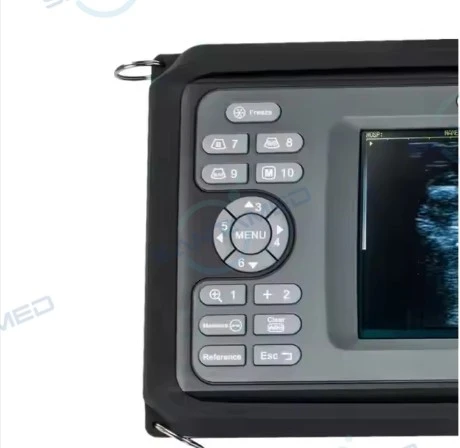
The user interface of the notebook ultrasound should be intuitive and easy to navigate. Surgeons and surgical staff are often under time pressure during procedures, so they need to be able to quickly access the necessary functions. The device should have clearly labeled buttons or a touch - screen interface that allows for easy adjustment of settings such as image depth, gain, and probe frequency. Additionally, the ultrasound system should support features like one - touch freeze and measurement tools, which can streamline the imaging process.
Durability
The operating room environment can be harsh, with the potential for accidental bumps, spills, and exposure to disinfectants. The notebook ultrasound must be durable enough to withstand these conditions. It should have a robust housing that protects the internal components from damage. Some models are also designed to be splash - proof or dust - resistant, which further enhances their reliability in a surgical setting.
Safety Requirements
Electrical Safety
The notebook ultrasound device must meet strict electrical safety standards. It should be properly grounded to prevent electrical shocks to the patient and surgical staff. The power supply should be stable and free from electrical interference. Additionally, the device should have built - in safety features such as over - current protection and short - circuit protection to ensure safe operation during surgery.
Sterilization
Since the ultrasound probe comes into contact with the patient's body during surgery, it must be properly sterilized. The probe should be made of materials that can withstand common sterilization methods, such as chemical disinfection or autoclaving. Some notebook ultrasound systems offer disposable probe covers, which can be used to provide an additional layer of protection and simplify the sterilization process.
Infection Control
In addition to probe sterilization, the entire notebook ultrasound system should be designed to minimize the risk of infection. The device should have smooth surfaces that are easy to clean and disinfect. Any cables or connectors should be sealed to prevent the ingress of contaminants. Surgical staff should also follow strict infection control protocols when using the ultrasound device, such as wearing gloves and changing probe covers between patients.
Training and Support Requirements
Training
Surgeons and surgical staff need to receive proper training on how to use the notebook ultrasound effectively. Training should cover the basic principles of ultrasound imaging, the operation of the specific notebook ultrasound model, and how to interpret the images obtained during surgery. Many suppliers, including our company, offer training programs that can be conducted on - site at the hospital or through online courses. Hands - on training is particularly important to ensure that users are comfortable with the device and can use it safely and accurately in a surgical setting.
Technical Support
Reliable technical support is essential for the smooth operation of the notebook ultrasound during surgery. In case of any technical issues, such as a malfunctioning probe or a software problem, the supplier should be able to provide prompt assistance. This may include remote troubleshooting, on - site repair, or the provision of replacement parts. A dedicated technical support team can minimize downtime and ensure that the surgical procedure can continue without significant disruption.
Integration Requirements
Compatibility with Surgical Equipment
The notebook ultrasound should be compatible with other surgical equipment in the operating room. For example, it may need to be integrated with the surgical lighting system to ensure proper illumination of the imaging area. It should also be able to communicate with other monitoring devices, such as electrocardiogram (ECG) monitors and blood pressure monitors, to provide a comprehensive view of the patient's condition during surgery.
Electronic Health Record (EHR) Integration
In today's digital healthcare environment, integration with the hospital's electronic health record system is becoming increasingly important. The notebook ultrasound should be able to store and transfer patient images and data to the EHR system. This allows for easy access to the ultrasound images by other members of the healthcare team, such as radiologists and surgeons, for further review and consultation. It also facilitates the documentation of the surgical procedure and the patient's medical history.
As a notebook ultrasound supplier, we offer a range of high - quality products that meet all these requirements. Our Handheld Ultrasound, Portable Black and White Ultrasound, and Tablet Ultrasound Machine are designed with the latest technology and user - friendly features to ensure optimal performance during surgery.
If you are interested in learning more about our notebook ultrasound products or would like to discuss your specific requirements for surgical use, we encourage you to contact us for a procurement consultation. Our team of experts is ready to assist you in finding the best solution for your surgical needs.
References
- Dähnert, W. (2012). Radiology Review Manual. Lippincott Williams & Wilkins.
- Goldberg, B.B., & Liu, J. (2003). Diagnostic Ultrasound. Elsevier Health Sciences.
- Rumack, C.M., Wilson, S.R., & Charboneau, J.W. (2010). Diagnostic Ultrasound. Elsevier Saunders.


