


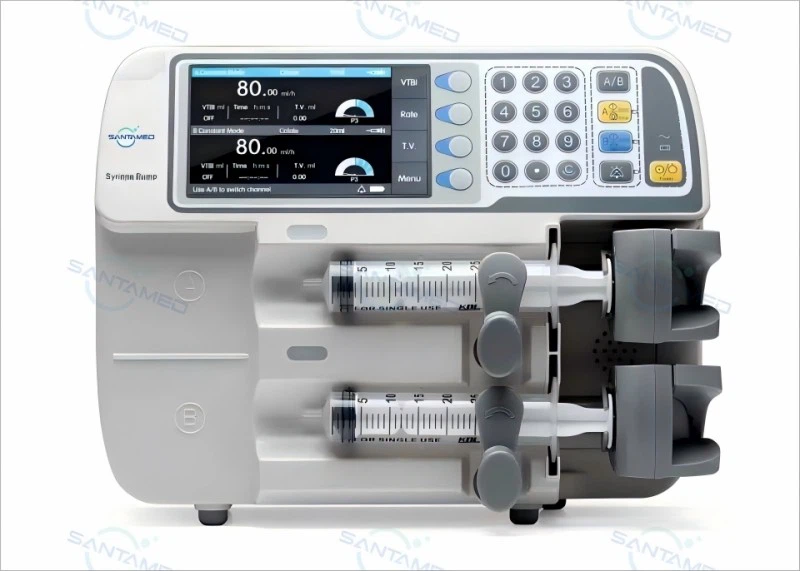
A syringe pump is a medical device that is used to administer fluids, such as nutrients and medications, into a patient's body in a controlled manner. It is an essential piece of equipment in many healthcare settings, including hospitals, clinics, and home care. In this blog post, I will provide an in - depth look at what a syringe pump is, how it works, its types, and why it is a crucial tool in modern medicine. As a syringe pump supplier, I am well - versed in the features and benefits of these devices and am excited to share this knowledge with you.
How Does a Syringe Pump Work?
At its core, a syringe pump operates on a relatively simple principle. It consists of a motor - driven mechanism that pushes the plunger of a syringe at a precisely controlled rate. The syringe is filled with the fluid to be administered, whether it's a drug solution, a nutritional supplement, or another type of fluid. The pump is programmed with the desired flow rate, which can be set in various units such as milliliters per hour (mL/h).
Once the pump is activated, the motor begins to move the plunger forward at a constant speed, delivering the fluid from the syringe into the patient's bloodstream through an intravenous (IV) line or other delivery route. This controlled delivery is crucial because it allows healthcare providers to administer medications and fluids at a rate that is tailored to the patient's specific needs. For example, some medications need to be delivered very slowly to avoid adverse reactions, while others may require a more rapid infusion.
Types of Syringe Pumps
There are several types of syringe pumps available on the market, each designed to meet different clinical requirements.
Fixed - Rate Syringe Pumps
Fixed - rate syringe pumps are the simplest type. They are pre - set to deliver fluids at a single, fixed rate. These pumps are often used for applications where a constant, unchanging flow rate is sufficient, such as in some basic nutritional infusions. They are relatively inexpensive and easy to use, making them a popular choice in some low - resource settings.
Programmable Syringe Pumps
Programmable syringe pumps offer much more flexibility. They allow healthcare providers to set multiple infusion rates, including different flow rates at different times during the infusion process. This is particularly useful for administering medications that require a complex dosing schedule, such as antibiotics that need to be given in a loading dose followed by a maintenance dose. Programmable pumps can also be programmed to deliver bolus doses, which are larger amounts of fluid given over a short period.
Medical Syringe Pump
Medical syringe pumps are designed specifically for use in a hospital or clinical environment. They are built to meet strict medical standards and often come with advanced features such as built - in safety mechanisms to prevent over - infusion or under - infusion. These pumps may also have the ability to interface with other medical devices, such as patient monitors, to provide a more integrated approach to patient care.
Portable Injection Syringe Pump
Portable injection syringe pumps are a more recent development. They are designed to be lightweight and easy to carry, allowing patients to receive continuous infusions while on the move. This is especially beneficial for patients who need to be mobile during their treatment, such as those undergoing chemotherapy or pain management at home. Portable pumps are often battery - operated and can be worn on a belt or carried in a small case.
Key Features of Syringe Pumps
Syringe pumps come with a variety of features that enhance their functionality and safety.
Accuracy
One of the most important features of a syringe pump is its accuracy. Precise delivery of fluids is essential to ensure that patients receive the correct dose of medications and nutrients. High - quality syringe pumps can deliver fluids with an accuracy of within a few percent of the set rate.
Safety Alarms
Safety alarms are another crucial feature. These alarms are designed to alert healthcare providers if there is a problem with the infusion, such as an occlusion in the IV line, low battery, or an empty syringe. This helps to prevent serious complications and ensures that patients receive continuous and safe treatment.
User - Friendly Interface
A user - friendly interface is also important. Healthcare providers need to be able to easily program the pump, set the flow rate, and monitor the infusion process. Modern syringe pumps often have touch - screen displays and intuitive menus that make them easy to operate, even for less - experienced users.
Compatibility
Syringe pumps should be compatible with a wide range of syringes. Different medications and fluids may require different syringe sizes, and the pump should be able to accommodate these variations. Additionally, some pumps are designed to be compatible with different types of IV sets and connectors.
Applications of Syringe Pumps
Syringe pumps have a wide range of applications in healthcare.

Medication Administration
One of the most common uses of syringe pumps is for the administration of medications. They are used to deliver a variety of drugs, including painkillers, antibiotics, chemotherapy agents, and insulin. By controlling the rate of infusion, syringe pumps help to ensure that medications are delivered safely and effectively.
Nutritional Support
Syringe pumps are also used for nutritional support. Patients who are unable to eat normally, such as those with swallowing difficulties or gastrointestinal problems, may require enteral or parenteral nutrition. Syringe pumps can be used to deliver these nutritional solutions at a controlled rate, ensuring that patients receive the necessary nutrients.
Anesthesia Delivery
In the operating room, syringe pumps are used for the delivery of anesthesia. Anesthesiologists use these pumps to administer anesthetic agents at a precise rate to maintain the patient's level of anesthesia throughout the surgical procedure.
Why Choose Our Syringe Pumps?
As a syringe pump supplier, we take pride in offering high - quality products that meet the needs of healthcare providers and patients. Our syringe pumps are designed with the latest technology and are built to be reliable, accurate, and easy to use.
We offer a wide range of syringe pumps, including both fixed - rate and programmable models, as well as medical and portable options. Our pumps are compatible with a variety of syringes and IV sets, ensuring that they can be used in a variety of clinical settings.
In addition to our high - quality products, we also provide excellent customer support. Our team of experts is available to answer any questions you may have about our syringe pumps, including installation, operation, and maintenance. We also offer training programs to help healthcare providers get the most out of our products.
If you are in the market for a syringe pump, we encourage you to contact us for more information. Our sales team will be happy to discuss your specific needs and help you choose the right pump for your healthcare facility. Whether you are a large hospital, a small clinic, or a home care provider, we have the right solution for you.
Conclusion
Syringe pumps are an essential tool in modern medicine. They provide a controlled and accurate way to administer fluids and medications to patients, ensuring their safety and well - being. With a variety of types and features available, syringe pumps can be tailored to meet the specific needs of different healthcare settings.
As a syringe pump supplier, we are committed to providing high - quality products and excellent customer service. If you are interested in learning more about our syringe pumps or would like to discuss a potential purchase, please do not hesitate to contact us. We look forward to working with you to improve patient care through the use of our advanced syringe pump technology.
References
- Barash PG, Cullen BF, Stoelting RK. Clinical Anesthesia. Lippincott Williams & Wilkins; 2013.
- Kee JL, Hayes ER, McCuistion LE. Pharmacology: A Patient - Centered Nursing Process Approach. Elsevier; 2019.
- Hall JB, Schmidt GA, Kress JP. Principles of Critical Care. McGraw - Hill Education; 2017.


