


As a supplier of Infant Radiant Warmers, understanding the noise level of these crucial medical devices is of utmost importance. In neonatal care units, the environment needs to be as calm and stress - free as possible for the delicate infants. The noise generated by medical equipment can potentially have an impact on the well - being and development of these young patients.
Significance of Noise Level in Neonatal Care
Neonates are extremely sensitive to their environment. Excessive noise can cause physiological stress responses, such as increased heart rate, blood pressure, and oxygen consumption. It may also disrupt their sleep patterns, which are vital for their growth and development. A quiet environment helps in reducing stress and promoting better recovery for the infants.
In a neonatal intensive care unit (NICU), multiple medical devices are in use simultaneously. The cumulative noise from these devices can create a noisy environment. Therefore, the noise level of each individual device, including Infant Radiant Warmers, needs to be carefully considered.
Factors Affecting the Noise Level of Infant Radiant Warmers
Fan Operation
Most Infant Radiant Warmers are equipped with fans to circulate warm air around the infant. The operation of these fans is one of the primary sources of noise. The speed of the fan, the design of the fan blades, and the quality of the motor all contribute to the noise level. High - speed fans generally produce more noise than low - speed ones. However, a certain fan speed is required to maintain the appropriate temperature around the infant.
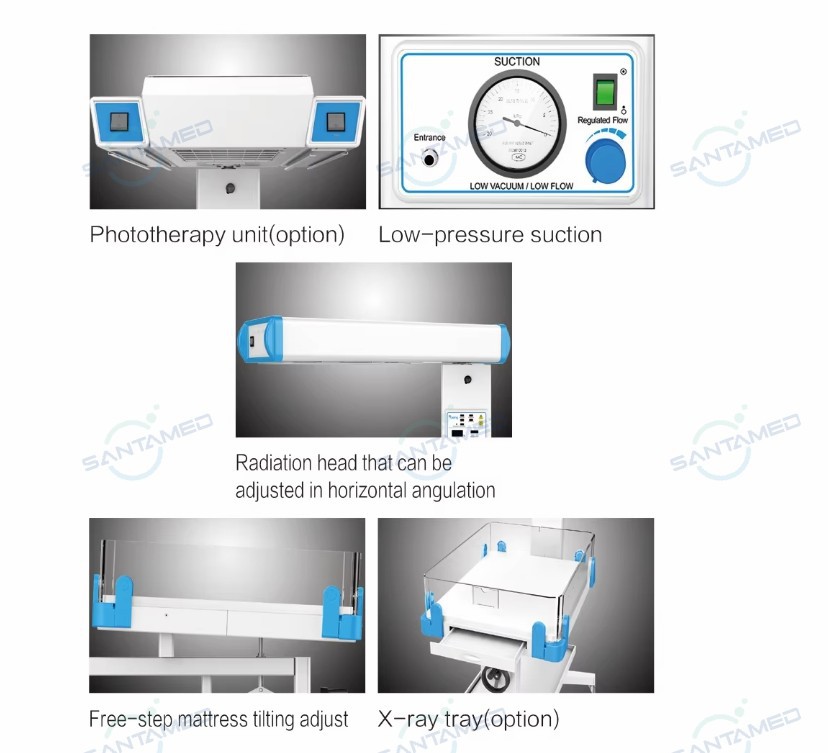

Heating Element
The heating element in an Infant Radiant Warmer can also generate some noise. As the heating element heats up and cools down, it may produce a cracking or popping sound. This is due to the expansion and contraction of the materials in the heating element. The type of heating element used, such as ceramic or metal, can affect the noise level. Ceramic heating elements tend to be quieter than some metal ones.
Structural Design
The overall structural design of the Infant Radiant Warmer plays a role in noise generation. Loose parts, vibrations, and poor insulation can all contribute to increased noise. A well - designed warmer with tight - fitting components and proper insulation can significantly reduce the noise level. For example, using rubber gaskets to dampen vibrations and enclosing noisy components in sound - absorbing materials can help in noise reduction.
Measuring the Noise Level of Infant Radiant Warmers
The noise level of an Infant Radiant Warmer is typically measured in decibels (dB). To measure the noise, a sound level meter is used. The measurement is usually taken at a specific distance from the warmer, typically at the level of the infant's head.
The World Health Organization (WHO) recommends that the noise level in NICUs should not exceed 45 dB during the day and 35 dB at night. When testing an Infant Radiant Warmer, it is important to ensure that the measurement is taken in a quiet environment to get an accurate reading.
Industry Standards and Regulations
There are industry standards and regulations regarding the noise level of medical devices, including Infant Radiant Warmers. These standards are in place to ensure the safety and well - being of the patients. Manufacturers are required to test their products and ensure that they meet the specified noise level limits.
Compliance with these standards is not only a legal requirement but also a mark of quality. As a supplier, we ensure that all our Infant Radiant Warmers are tested rigorously to meet or exceed the industry standards for noise level.
Our Approach to Noise Reduction in Infant Radiant Warmers
At our company, we understand the importance of providing a quiet environment for neonates. We have implemented several strategies to reduce the noise level of our Infant Radiant Warmers.
Advanced Fan Technology
We use high - quality fans with optimized blade designs. These fans are engineered to operate at lower noise levels while still providing efficient air circulation. We also use variable - speed fans, which can adjust their speed according to the temperature requirements. This allows us to maintain the appropriate temperature with minimal noise.
Noise - Absorbing Materials
We incorporate noise - absorbing materials in the construction of our warmers. These materials are placed around the noisy components, such as the fan and the heating element, to reduce the transmission of sound. For example, we use acoustic foam to line the interior of the warmer's housing.
Precision Engineering
Our warmers are precision - engineered to ensure that all components fit tightly and there are no loose parts. This reduces vibrations and the associated noise. We also conduct thorough quality control checks during the manufacturing process to ensure that each warmer meets our strict noise - reduction standards.
Comparison with Infant Radiant Incubators
It is also interesting to compare the noise level of Infant Radiant Warmers with Infant Radiant Incubators. While both devices are used for keeping infants warm, they have different noise characteristics.
Infant Radiant Incubators typically have a more enclosed design, which can help in reducing the noise level. However, they also have additional components, such as air - filtration systems and humidifiers, which can contribute to the noise. On the other hand, Infant Radiant Warmers are more open and rely mainly on a fan for air circulation.
In general, the noise level of an Infant Radiant Warmer can be comparable to that of an Infant Radiant Incubator, depending on the specific models and their design features.
Impact of Noise Level on User Experience
The noise level of an Infant Radiant Warmer not only affects the infants but also the healthcare providers. Excessive noise can be a distraction for the medical staff, making it difficult for them to focus on their work. It can also cause fatigue and stress over time.
A quieter warmer provides a more comfortable working environment for the healthcare providers. They can better attend to the needs of the infants without being constantly bothered by the noise. This, in turn, can lead to better quality of care.
Conclusion
The noise level of an Infant Radiant Warmer is a critical factor in neonatal care. It has implications for the well - being of the infants, the comfort of the healthcare providers, and the overall quality of care in the NICU. As a supplier, we are committed to providing high - quality Infant Radiant Warmers with low noise levels.
We continuously invest in research and development to improve the noise - reduction features of our products. By using advanced technology, precision engineering, and high - quality materials, we ensure that our warmers meet the strictest industry standards for noise level.
If you are interested in learning more about our Infant Radiant Warmers or are considering a purchase, we invite you to contact us for a detailed discussion. Our team of experts is ready to assist you in finding the best solution for your neonatal care needs.
References
- World Health Organization. Guidelines for Noise in Health - Care Settings.
- Industry standards for medical device noise levels.


