


As a dedicated supplier of syringe pumps, I've witnessed firsthand the crucial role these devices play in modern medical settings. From precise drug delivery to fluid management, syringe pumps have become indispensable tools in healthcare. But have you ever wondered what powers these remarkable machines? In this blog post, we'll delve into the various power sources for syringe pumps, exploring their advantages, limitations, and applications.
Electrical Power
The most common power source for syringe pumps is electricity. Electrical syringe pumps are typically powered by either an alternating current (AC) or a direct current (DC).
AC Power
AC-powered syringe pumps are designed to be plugged into a standard electrical outlet. This makes them ideal for use in fixed locations such as hospitals, clinics, and operating rooms. AC power provides a stable and reliable source of energy, ensuring continuous operation of the syringe pump.
One of the main advantages of AC-powered syringe pumps is their ability to deliver high levels of power. This allows them to handle larger syringes and deliver medications at higher flow rates. Additionally, AC-powered pumps are often equipped with advanced features such as programmable infusion rates, multiple infusion modes, and alarms for various safety functions.
However, AC-powered syringe pumps also have some limitations. They are dependent on a continuous supply of electricity, which means they may not be suitable for use in areas with unreliable power grids or during power outages. In such cases, a backup power source such as a battery or a generator may be required.
DC Power
DC-powered syringe pumps, on the other hand, are designed to operate on a direct current. They are typically powered by rechargeable batteries, which makes them portable and suitable for use in a variety of settings, including home healthcare, ambulances, and field hospitals.
One of the main advantages of DC-powered syringe pumps is their mobility. They can be easily transported from one location to another without the need for a continuous supply of electricity. This makes them ideal for use in situations where patients need to be moved or treated outside of a traditional healthcare facility.
DC-powered syringe pumps also offer greater flexibility in terms of power management. They can be charged using a variety of power sources, including AC adapters, car chargers, and solar panels. This allows healthcare providers to use the pump in different environments and ensures that it is always ready for use.
However, DC-powered syringe pumps also have some limitations. They typically have a lower power output compared to AC-powered pumps, which means they may not be suitable for use with larger syringes or for delivering medications at high flow rates. Additionally, the battery life of DC-powered pumps can vary depending on the model and the usage, which means they may need to be recharged frequently.
Battery Power
Battery power is a popular choice for syringe pumps, especially in portable and mobile applications. Batteries provide a convenient and reliable source of power, allowing healthcare providers to use the pump without the need for a continuous supply of electricity.
There are several types of batteries that can be used to power syringe pumps, including lead-acid batteries, nickel-cadmium (NiCd) batteries, nickel-metal hydride (NiMH) batteries, and lithium-ion (Li-ion) batteries.
Lead-Acid Batteries
Lead-acid batteries are the oldest and most common type of battery used in syringe pumps. They are relatively inexpensive and have a long lifespan, making them a popular choice for applications where cost is a major factor.
However, lead-acid batteries also have some limitations. They are heavy and bulky, which can make them difficult to transport. Additionally, they require regular maintenance, including charging and watering, to ensure optimal performance.
NiCd Batteries
NiCd batteries are a type of rechargeable battery that was widely used in the past. They are known for their high energy density, long lifespan, and ability to withstand repeated charging and discharging cycles.
However, NiCd batteries also have some limitations. They contain cadmium, which is a toxic heavy metal that can be harmful to the environment and human health. Additionally, NiCd batteries are prone to a phenomenon called "memory effect," which can reduce their capacity over time if they are not fully discharged before recharging.
NiMH Batteries
NiMH batteries are a newer type of rechargeable battery that have replaced NiCd batteries in many applications. They have a higher energy density than NiCd batteries, which means they can store more energy in a smaller and lighter package.
NiMH batteries also do not contain cadmium, which makes them more environmentally friendly. Additionally, they are less prone to the memory effect than NiCd batteries, which means they can maintain their capacity over a longer period of time.
However, NiMH batteries also have some limitations. They have a shorter lifespan than NiCd batteries, which means they may need to be replaced more frequently. Additionally, they are more expensive than NiCd batteries, which can make them less cost-effective for some applications.
Li-ion Batteries
Li-ion batteries are the most advanced and widely used type of battery in modern syringe pumps. They have a high energy density, long lifespan, and low self-discharge rate, which makes them ideal for use in portable and mobile applications.
Li-ion batteries also do not contain toxic heavy metals, which makes them more environmentally friendly. Additionally, they are less prone to the memory effect than NiCd and NiMH batteries, which means they can maintain their capacity over a longer period of time.
However, Li-ion batteries also have some limitations. They are more expensive than other types of batteries, which can make them less cost-effective for some applications. Additionally, they require a special charging circuit to prevent overcharging and overheating, which can reduce their lifespan and pose a safety risk.
Solar Power
Solar power is an emerging power source for syringe pumps, especially in remote and off-grid areas. Solar panels can be used to convert sunlight into electricity, which can then be used to power the syringe pump.
One of the main advantages of solar power is its renewable and sustainable nature. Solar energy is abundant and freely available, which means it can provide a reliable source of power without the need for fossil fuels or other non-renewable resources.
Solar power also offers greater flexibility in terms of power management. Solar panels can be installed in a variety of locations, including rooftops, ground-mounted arrays, and portable solar chargers. This allows healthcare providers to use the pump in different environments and ensures that it is always ready for use.
However, solar power also has some limitations. It is dependent on sunlight, which means it may not be suitable for use in areas with limited sunlight or during periods of bad weather. Additionally, solar panels can be expensive to install and maintain, which can make them less cost-effective for some applications.

Conclusion
In conclusion, the power source for a syringe pump depends on a variety of factors, including the application, the environment, and the user's preferences. Electrical power is the most common power source for syringe pumps, but battery power and solar power are also becoming increasingly popular, especially in portable and mobile applications.
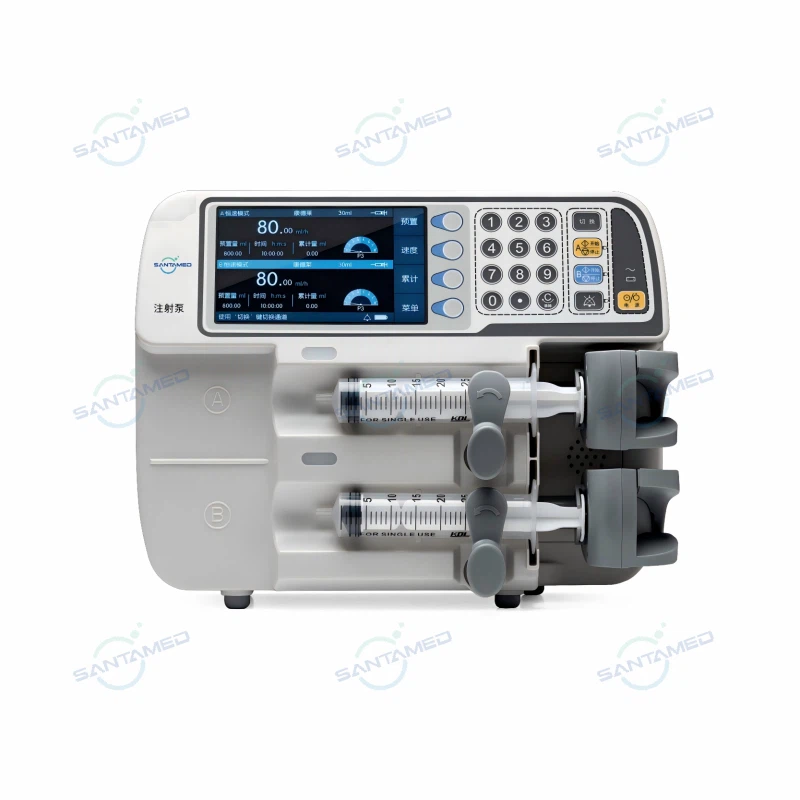
As a syringe pump supplier, we offer a wide range of products that are powered by different types of power sources. Our Portable Injection Syringe Pump is designed to be powered by rechargeable batteries, making it ideal for use in a variety of settings. Our Medical Syringe Pump is available in both AC and DC power options, allowing you to choose the power source that best suits your needs.
If you're interested in learning more about our syringe pumps or would like to discuss your specific requirements, please don't hesitate to contact us. Our team of experts is always available to provide you with the information and support you need to make an informed decision.
References
- "Syringe Pumps: Principles and Applications." Medical Device and Diagnostic Industry.
- "Battery Technologies for Medical Devices." Battery University.
- "Solar Power for Medical Devices." World Health Organization.


