


Handheld ultrasound devices have revolutionized the field of medical imaging, offering portability and real - time diagnostic capabilities. As a leading handheld ultrasound supplier, I am excited to share the principles behind these remarkable devices, shedding light on how they work and their significance in modern healthcare.
Understanding Ultrasound Basics
Ultrasound refers to sound waves with frequencies higher than the upper audible limit of human hearing, typically above 20,000 Hz. In medical applications, frequencies ranging from 2 MHz to 15 MHz are commonly used. These high - frequency sound waves are generated and transmitted into the body through a transducer, which is a key component of a handheld ultrasound device.

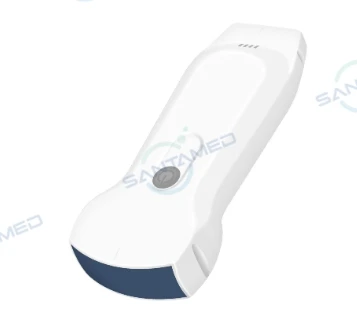
The transducer works on the principle of the piezoelectric effect. Piezoelectric materials, such as certain ceramics or crystals, can convert electrical energy into mechanical energy (sound waves) and vice versa. When an electrical current is applied to the piezoelectric element in the transducer, it vibrates, producing ultrasound waves. Conversely, when the ultrasound waves are reflected back from the internal structures of the body and hit the transducer, they cause the piezoelectric element to vibrate again, generating an electrical signal.
The Process of Image Formation in Handheld Ultrasound
- Transmission of Ultrasound Waves
When the handheld ultrasound is turned on, the operator places the transducer on the skin surface, usually with a layer of coupling gel to ensure good acoustic contact. The transducer emits a short burst of ultrasound waves into the body. The ultrasound waves travel through the body tissues, and as they encounter different types of tissues, such as muscle, bone, and fluid - filled cavities, a portion of the waves is reflected back towards the transducer. - Reflection and Echo Detection
The reflection of ultrasound waves occurs due to the differences in acoustic impedance between various tissues. Acoustic impedance is a property that depends on the density and the speed of sound in the tissue. When ultrasound waves cross a boundary between two tissues with different acoustic impedances, some of the energy is reflected as an echo. The strength of the echo depends on the difference in acoustic impedance and the angle of incidence of the ultrasound wave.
The transducer then receives these echoes and converts them into electrical signals. These signals are sent to the handheld ultrasound device's processing unit. - Signal Processing and Image Reconstruction
The processing unit of the handheld ultrasound device uses sophisticated algorithms to analyze the received electrical signals. It determines the time it takes for the echoes to return to the transducer, which is related to the distance of the reflecting interface from the transducer. By measuring the time - of - flight of the echoes, the device can calculate the depth of the reflecting structures within the body.
In addition to depth information, the processing unit also analyzes the amplitude of the echoes, which gives an indication of the type of tissue. For example, dense tissues like bone reflect a large amount of ultrasound energy, resulting in strong echoes, while fluid - filled areas like cysts reflect very little energy, producing weak echoes.
Based on this information, the device reconstructs a two - dimensional image on the screen. Different shades of gray are used to represent the varying intensity of the echoes. Bright areas on the image typically correspond to highly reflective tissues, while dark areas represent less reflective or fluid - filled regions.
Advantages of Handheld Ultrasound Based on its Principle
- Portability and Accessibility
Because of the relatively simple principle and compact design enabled by modern electronics, handheld ultrasound devices are extremely portable. They can be easily carried from one location to another, allowing healthcare providers to perform on - the - spot examinations in various settings, such as at the patient's bedside, in remote areas, or during emergency situations. This portability significantly improves the accessibility of diagnostic ultrasound, especially in regions with limited medical infrastructure. - Real - Time Imaging
The real - time nature of handheld ultrasound is a direct result of its operating principle. As the transducer continuously emits and receives ultrasound waves, the device can update the image on the screen in real - time. This allows healthcare providers to observe dynamic processes within the body, such as the movement of organs, blood flow in vessels, and the beating of the heart. Real - time imaging is crucial for making immediate diagnoses and guiding procedures such as needle biopsies. - Non - Invasive and Safe
Since handheld ultrasound uses sound waves instead of ionizing radiation like X - rays or CT scans, it is a non - invasive and safe imaging modality. It can be used repeatedly without causing harm to the patient, making it suitable for a wide range of applications, including prenatal care, where the safety of the fetus is of utmost importance.
Our Handheld Ultrasound Product Range and Related Offerings
As a supplier, we offer a diverse range of handheld ultrasound devices, and we also have other related ultrasound products. Our Tablet Ultrasound Machine combines the portability of a tablet with the power of ultrasound imaging. It is easy to use and provides high - quality images, making it a great choice for point - of - care applications.
The Notebook Ultrasound is another option in our product line. With a design similar to a notebook computer, it offers enhanced functionality and performance, suitable for more advanced diagnostic needs.
For larger - scale applications, we have the Trolley - type B/W Ultrasound System. This system provides comprehensive diagnostic capabilities and is often used in hospitals and clinics.
Our Diagnostic Ultrasound Devices are designed to meet the highest standards of accuracy and reliability. They are equipped with advanced features to ensure precise diagnoses.
In addition, our Portable Black and White Ultrasound is a cost - effective solution for basic diagnostic needs. It is lightweight and easy to operate, making it ideal for mobile healthcare services.
Conclusion and Invitation to Purchase
The principle of handheld ultrasound is based on the piezoelectric effect and the reflection of ultrasound waves from internal body tissues. This technology has transformed the way medical imaging is conducted, offering portability, real - time imaging, and safety. As a supplier, we are committed to providing high - quality handheld ultrasound devices and related products to meet the diverse needs of healthcare providers.
If you are interested in our handheld ultrasound products or any of the related offerings mentioned above, we invite you to contact us for a detailed discussion. Our team of experts is ready to assist you in finding the most suitable solution for your specific requirements. Whether you are a small clinic, a large hospital, or a mobile healthcare service provider, we have the right product for you. Let's work together to bring the benefits of advanced ultrasound technology to your patients.
References
- Bushberg, J. T., Seibert, J. A., Leidholdt, E. M., & Boone, J. M. (2012). The essential physics of medical imaging. Lippincott Williams & Wilkins.
- Rumack, C. M., Wilson, S. R., & Charboneau, J. W. (2010). Diagnostic ultrasound. Mosby Elsevier.
- Phelps, M. E. (2004). Impact of imaging in biomedical research. Proceedings of the National Academy of Sciences, 101(Suppl 2), 11398 - 11403.


