


Troubleshooting a syringe pump that suddenly stops working can be a tense situation, especially in medical settings where it is critical for patient care. As a trusted syringe pump supplier, we understand the importance of quick and effective problem - solving. In this blog post, we'll walk you through a comprehensive set of steps to diagnose and potentially fix issues when your syringe pump malfunctions.
1. Initial Checks
Power Supply
The first aspect to examine is the power source of the syringe pump. It could be running on battery or plugged into a power outlet. If the pump is connected to an outlet, check if the power cord is securely plugged in. Sometimes, a loose connection can cause the pump to stop. You can try unplugging the cord and plugging it back in firmly.
If the syringe pump operates on battery, check the battery level. Some pumps have a battery indicator display. A low - battery condition might be the reason for the sudden stop. In case the battery is low, recharge it as per the manufacturer's instructions. If the battery fails to hold a charge or shows persistent low - level warnings, it may need to be replaced. You can find the appropriate replacement batteries for our Portable Injection Syringe Pump on our official website.
Physical Obstructions
Inspect the syringe pump for any physical obstructions. Sometimes, debris, dust, or small objects can get stuck in the moving parts of the pump, preventing it from functioning properly. Check around the syringe holder, the drive mechanism, and the tubing connections.
Remove the syringe from the pump carefully. Use a clean, dry cloth to wipe away any visible dust or debris from the inside of the syringe holder. Ensure that there are no kinks in the tubing. A kinked tube can disrupt the flow and cause the pump to stop. Straighten out any kinks and check if the pump restarts.

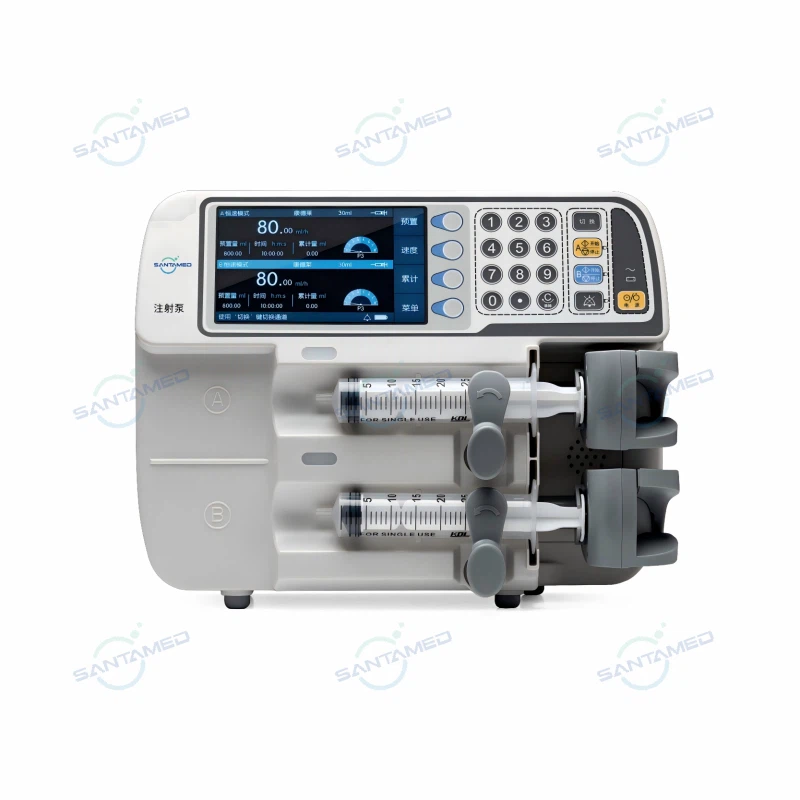
2. Syringe and Tubing Checks
Syringe Installation
An incorrectly installed syringe can lead to the pump malfunctioning. Make sure the syringe is properly seated in the pump's syringe holder. Different syringe pumps have different types of holders, but typically, the syringe should be placed securely with the plunger engaged with the drive mechanism.
Check the size of the syringe. The pump may be designed to work with specific syringe sizes. Using an inappropriate syringe size can cause the pump to stop. Refer to the user manual of your Medical Syringe Pump to confirm the compatible syringe sizes. If you are using a new batch of syringes, ensure they meet the specifications of the pump.
Tubing Integrity
Examine the entire length of the tubing for leaks, cracks, or blockages. A leak in the tubing can cause air to enter the system, which may trigger the pump's safety mechanism to stop. You can perform a simple visual inspection of the tubing by looking for any signs of damage.
To check for blockages, you can try gently squeezing the tubing near the syringe and at various points along its length. If there is resistance when squeezing, it could indicate a blockage. You may be able to clear a minor blockage by flushing the tubing with an appropriate solution as per the manufacturer's guidelines. If the tubing is severely damaged, it should be replaced.
3. Software and Display Checks
Display Malfunction
If the pump has a digital display, check if it is functioning properly. A blank or unresponsive display can be a sign of a software issue or a hardware problem in the display unit. Try restarting the pump to see if the display comes back on. If the display remains blank, it could be due to a power supply issue to the display unit or a more serious software glitch.
Some pumps have a built - in diagnostic mode. Refer to your user manual to find out how to access this mode. Running a diagnostic test can help identify if there are any software - related problems. If the diagnostic test indicates a software issue, you may need to update the pump's software. Check our official website for the latest software updates for your specific syringe pump model.
Alarm and Error Messages
Pay attention to any alarm sounds or error messages displayed on the pump. These can provide valuable clues about the problem. Each error message has a specific meaning, which is usually explained in the user manual.
For example, an "air in line" alarm may indicate that air has entered the tubing. To resolve this, you can follow the steps provided in the manual, which usually involve priming the tubing to remove the air. If the error message is related to a sensor malfunction, it may require professional servicing.
4. Mechanical and Sensor Checks
Drive Mechanism
The drive mechanism is responsible for moving the syringe plunger. If the pump has stopped, there could be a problem with this mechanism. Listen for any unusual noises when trying to start the pump. Grinding, clicking, or other abnormal sounds may indicate a mechanical issue in the drive mechanism.
Inspect the gears, belts, and other moving parts in the drive mechanism if possible. Look for signs of wear and tear, such as broken teeth on gears or frayed belts. If you notice any damage, do not attempt to repair it yourself. Contact our technical support team for assistance.
Sensors
Syringe pumps are equipped with various sensors to monitor functions such as flow rate, pressure, and air in the line. A faulty sensor can cause the pump to stop. If the pump has a self - diagnostic system, it may identify which sensor is malfunctioning.
However, diagnosing sensor issues accurately can be complex. If you suspect a sensor problem and the self - diagnostic system does not provide a clear solution, it is best to contact our support. Our technicians are trained to test and replace sensors on our syringe pumps.
5. Professional Assistance
If you have gone through all the above steps and still cannot resolve the issue, it's time to seek professional help. As a leading syringe pump supplier, we offer comprehensive technical support. Our team of experts is available to assist you with troubleshooting over the phone, via email, or in person in some cases.
We also provide repair and maintenance services. If your syringe pump requires replacement parts, we can ensure that you get genuine, high - quality components that are specifically designed for your pump model.
When contacting us for support, be prepared to provide as much information as possible. This includes the model and serial number of the pump, a detailed description of the problem, and any error messages or unusual observations you have made during the troubleshooting process.
Conclusion
A syringe pump stopping suddenly can be a cause for concern, but by following a systematic troubleshooting approach, many issues can be resolved quickly. Start with the basics such as power supply and physical obstructions, then move on to checking the syringe, tubing, software, and mechanical components.
If you encounter problems that you cannot solve on your own, do not hesitate to reach out to us. As a reliable syringe pump supplier, we are dedicated to ensuring that your medical equipment operates smoothly and safely. Whether you need a simple replacement part or in - depth technical assistance, we are here to support you.
If you are interested in purchasing our high - quality syringe pumps or have any questions about our products and services, we encourage you to contact us for procurement and negotiation. Experience the reliability and performance of our Portable Injection Syringe Pump and Medical Syringe Pump for yourself.
References
- Syringe Pump User Manuals.
- Manufacturer's Technical Documentation.


