Healthcare institutions fulfill numerous vital functions, exerting a profound influence on the health and well-being of the communities they serve. One key function provided by many large healthcare facilities-particularly hospitals-is surgery. Surgical procedures are typically performed in operating rooms, environments equipped with a diverse array of medical devices that all professional healthcare personnel should be familiar with.
Surgical Equipment and Instruments
Surgical equipment and instruments are an indispensable component of modern healthcare, enabling surgeons to execute complex procedures with precision and safety. In a busy operating room, a wide variety of instruments-ranging from basic tools to advanced machinery-each plays a distinct and critical role.
Basic Instruments
Scalpels and forceps are arguably the most widely recognized surgical instruments, used respectively for incising skin and manipulating tissue. Suture needles and surgical scissors facilitate wound closure and tissue manipulation. Retractors, available in various shapes and sizes, provide a clear field of view by pulling back tissue or organs. These represent just a few of the basic yet essential instruments found within the operating room.
Advanced Equipment
Electrosurgical units utilize electrical energy to perform incisions while minimizing blood loss, whereas surgical microscopes enhance precision during microsurgical procedures. Laparoscopic instruments, used in conjunction with video cameras, enable minimally invasive surgery, thereby reducing patient recovery times. The selection and utilization of these tools demand comprehensive knowledge and proficient skills from medical personnel, as the success of a surgical procedure often hinges upon their expert manipulation.
Anesthesia Machines
Anesthesia machines are among the advanced devices that contribute significantly to the success rate of surgical procedures. Crucial for patient comfort and safety during surgery, these machines facilitate the induction of a controlled state of unconsciousness in the patient.
How They Work
These sophisticated devices are capable of precisely delivering a mixture of anesthetic gases and oxygen, ensuring that the patient remains comfortable and unresponsive throughout the entire surgical procedure. Modern anesthesia machines-equipped with advanced ventilation, monitoring, and alarm systems-not only enhance patient safety but also provide vital physiological data in real time.
Related Vital Signs Monitors
During surgical procedures, the effective integration of anesthesia machines with vital signs monitors is paramount to patient safety. Vital signs monitors track various physiological parameters, such as blood pressure, heart rate, respiratory rate, and body temperature. These parameters provide critical information regarding the patient's physiological status during surgery, ensuring that the delivery of anesthetic agents is continuously fine-tuned to meet the patient's specific needs. The continuous stream of data from these monitors enables anesthesiologists to make informed decisions, rapidly address any potential issues, and maintain a stable state of anesthesia.
Surgical Lights and Magnification Equipment
Other essential tools required for a successful operating room include surgical lights and magnification equipment. These devices are designed to provide surgeons with the clearest possible visual field while minimizing fatigue during prolonged surgical procedures.
Surgical Lighting
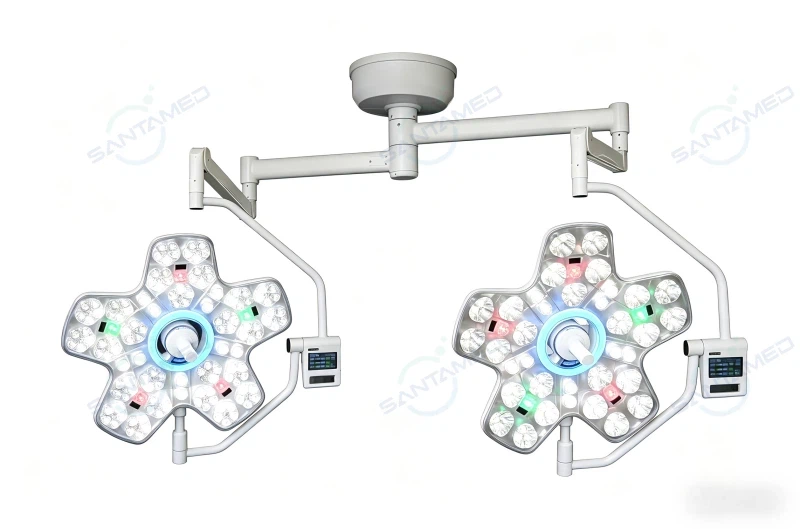
Surgical lights are crucial for enhancing the visibility of low-contrast objects and deep cavities. Their design aims to provide a color temperature that alleviates eye strain and improves tissue differentiation. Modern surgical lights feature adjustable brightness and focal distance, allowing surgeons to tailor lighting conditions to the specific requirements of each procedure.
A Closer Look at Magnification Equipment
Magnification equipment also plays a vital role in surgery. It enhances a surgeon's visual acuity, enabling them to perform complex procedures-such as microsurgery or reconstructive surgery-with greater precision. Devices such as surgical loupes and surgical microscopes are designed specifically for this purpose. Surgical loupes are the most commonly used tools due to their portability and convenience. However, surgical microscopes offer superior magnification and illumination, making them the preferred choice for complex surgical procedures.
Surgical Tables and Accessories
Another critical component of surgical equipment is the surgical table and its accompanying accessories. The design and functionality of these tables directly impact the efficiency and success rate of surgical procedures. Surgical tables are designed to accommodate a wide range of surgical needs, featuring functions such as height and tilt adjustment, as well as specialized sections tailored to different body parts. The physical design of the table must ensure patient stability and comfort while providing the surgical team with optimal operating space.
Selecting a Surgical Table
The selection of a surgical table is influenced by various factors, including the type of surgery, patient positioning requirements, and the surgeon's preferences. For instance, orthopedic surgery may require an orthopedic extension table, while neurosurgery may necessitate a specialized headrest. Additionally, the attachment points for accessories-such as armboards, leg holders, and anesthesia screens-should be taken into consideration.
Overlay Platforms
Surgical table overlay platforms are key accessories for surgical tables. They are designed to enhance the functionality of standard surgical tables, offering additional flexibility and adjustability. These platforms are frequently utilized in minimally invasive surgeries; they offer unique patient positioning capabilities and are constructed from radiolucent materials to ensure compatibility with diagnostic imaging procedures.
Patient positioning constitutes a critical aspect of surgical practice; improper positioning can lead to potential complications such as nerve damage or pressure ulcers. Optimal positioning ensures adequate exposure of the surgical site, maintains patient comfort and safety, facilitates monitoring by the anesthesiologist, and contributes to overall surgical efficiency.
Equipment and Instrument Storage
No guide to operating room equipment would be complete without addressing the proper storage of instruments and devices. Appropriate storage practices are paramount to maintaining both the operational efficiency and the hygienic standards of the surgical environment.
Sterilization and Storage
A comprehensive operating room storage system should facilitate easy access while minimizing the risk of damage to equipment. However, the storage process itself begins prior to placement within this system. First, medical personnel must thoroughly clean and disinfect instruments to eliminate any residual biological contaminants. Subsequently, instruments should be carefully sorted and organized within dedicated, sanitary storage units. The storage facilities themselves must be temperature-controlled and well-ventilated to prevent bacterial proliferation.
Routine Storage Inspections
Stored equipment requires periodic inspection and maintenance to extend its service life and to facilitate the early detection of any potential issues or malfunctions. Healthcare institutions should provide comprehensive training to ensure that every instrument and device receives the necessary routine maintenance, thereby guaranteeing optimal functionality during surgical procedures.