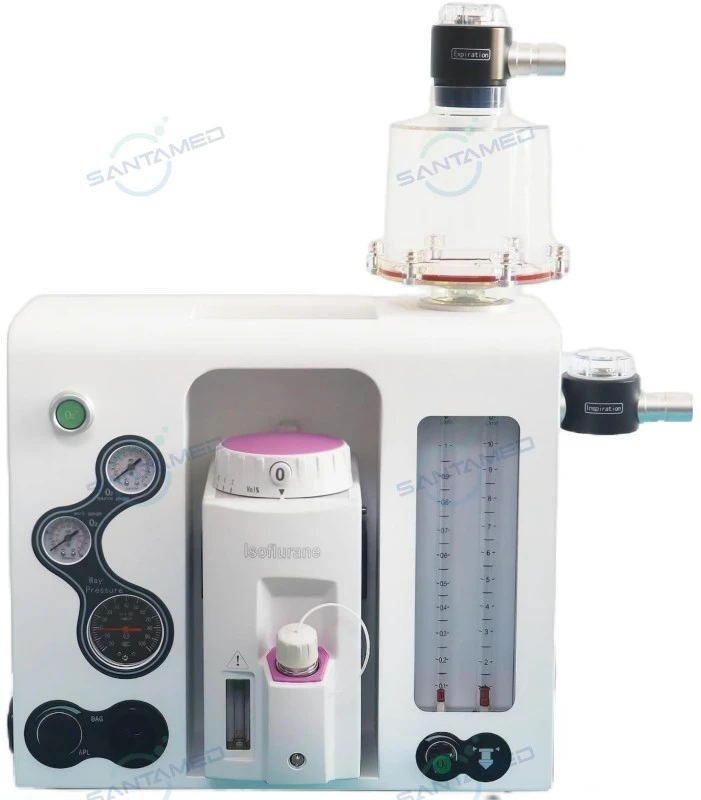
An anesthesia machine is a critical piece of medical equipment used to deliver anesthetic agents to patients undergoing surgery. It is designed to deliver precise mixtures of medical gases-such as oxygen and nitrous oxide-along with anesthetic vapors to maintain the state of anesthesia. The machine also supports patient ventilation and is equipped with a scavenging system to remove excess anesthetic gases, thereby minimizing risks to both patients and healthcare personnel.
Components of an anesthesia machine
Medical gas system: The machine receives medical gases from high-pressure cylinders or a central gas supply pipeline and regulates their flow via individual flowmeters.
Vaporizers: These devices add anesthetic vapor to the gas mixture based on user settings, ensuring the correct concentration of the anesthetic agent.
Breathing circuit: These circuits deliver the anesthetic gas mixture to the patient, enabling either spontaneous or controlled ventilation.
Scavenging system: This system removes exhaled anesthetic gases from the breathing circuit, preventing rebreathing and reducing environmental pollution.
Alarms and monitoring: Modern anesthesia machines are equipped with various alarm and monitoring systems to alert healthcare personnel to potential issues and track the patient's vital signs.
How an anesthesia machine works
Gas supply and mixing: The device receives medical gases via pipelines or cylinders. Oxygen, the primary gas, flows through an oxygen flowmeter. Vaporizers add anesthetic vapor to the oxygen stream, creating a precise gas mixture.
Breathing circuit: The mixed gas then flows through the breathing circuit, which consists of tubing, connectors, and valves. This circuit delivers the mixture to the patient's lungs, facilitating either spontaneous breathing or mechanical ventilation.
Scavenging system: After the patient exhales, the used gas is collected by the scavenging system, which removes and captures anesthetic gases to prevent environmental pollution.
Monitoring and control: Modern anesthesia machines feature monitoring systems that track vital signs, gas concentrations, and other parameters. These systems provide real-time data to the anesthesiologist, allowing for adjustments to anesthetic dosage to ensure patient safety.
Types of anesthesia machines
Conventional anesthesia machines: These machines operate based on fundamental principles of gas delivery and scavenging, while incorporating safety features such as fail-safe mechanisms and gas monitoring systems. Integrated Anesthesia Systems: These systems integrate with other medical equipment and electronic health records, enhancing workflow efficiency and patient management.
Modern Anesthesia Workstations: Equipped with advanced monitoring systems, target-controlled infusion pumps, and patient-controlled analgesia devices, these machines enable personalized anesthesia.
Portable Anesthesia Machines: Designed for use in remote areas and equipped with essential safety features, these machines operate reliably in diverse environments.
Applications of Anesthesia Machines
Anesthesia Delivery: Anesthesia machines deliver a mixture of medical gases and anesthetic agents to the patient. They combine gas from high-pressure cylinders with vapor produced by a vaporizer, supplying a precise anesthetic mixture through the breathing circuit.
Respiratory Support: These machines provide respiratory support through controlled ventilation. They offer modes such as manual and mechanical ventilation to assist or fully control the patient's breathing during surgery.
Monitoring and Safety: Advanced anesthesia machines feature monitoring systems that track vital signs, blood oxygen saturation, and other parameters. This enables anesthesiologists to identify complications in real-time, thereby enhancing patient safety.
Gas Recovery and Scavenging: To conserve anesthetic gases and reduce pollution, these machines recover exhaled gases. They remove carbon dioxide before the gas is re-inhaled, thereby saving on costly anesthetic agents.
Versatile Surgical Use: Anesthesia machines are adaptable to a wide range of surgical procedures and patient needs. They support general anesthesia, regional anesthesia, and sedation, making them versatile tools across various medical settings.